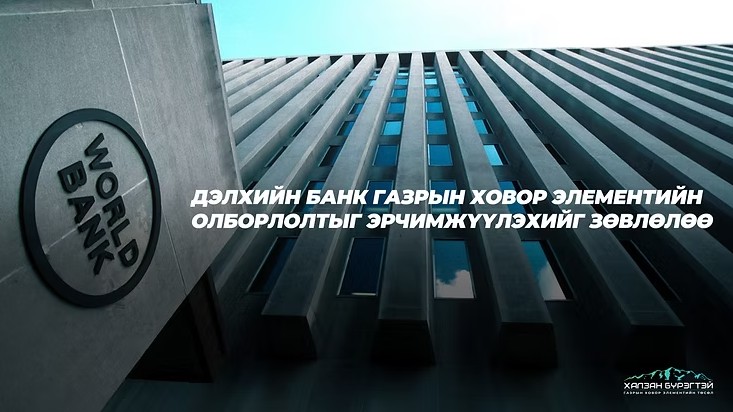
The World Bank’s “Mongolia Country Climate and Development Report” sets out a comprehensive package of reform measures to support policies and strategies addressing Mongolia’s climate and development challenges. It also highlights trends in coal, copper and rare earth elements.
Combine the goals
As the World Bank advises, Mongolia needs to address climate change in step with its economic development goals. At a time when global demand for coal is declining, Mongolia’s economy remains dependent on coal exports, which puts the economy at risk. Opening up other opportunities by tapping into the growing demand for copper and other minerals would therefore contribute both to the economy and to tackling climate change, the report says.
Nurture rare earth potential
Copper production is Mongolia’s biggest mining opportunity. Operations at Oyu Tolgoi, one of the world’s largest copper mines and a major copper producer in Mongolia, are expected to continue until 2055. The report also points out that rare earth elements (REE) are a mineral resource with similarly promising growth prospects.
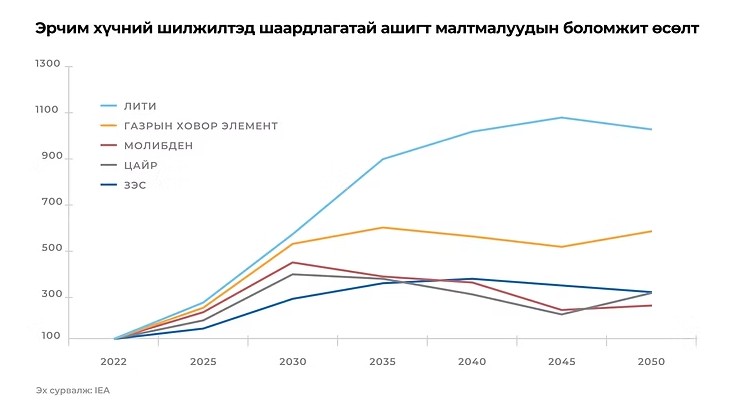
Although Mongolia has 3.1 million tonnes of rare earth reserves, uncertainties over its export strategy, investment costs and other factors are holding back the development of its mining potential. These issues must therefore be resolved before mining can begin.
As a sign of the international attention that Mongolia’s rare earth reserves and mining are attracting, even the United States signed an agreement with Mongolia on rare earth trade last year. Initial studies have been carried out at 3 rare earth deposits in Mongolia since 2013, and of these, exploration and research at Khalzan Buregtei are the most advanced. Once a strategy for mining, exporting and profiting from REE deposits has been defined, production-related issues will therefore need to be resolved. The report also notes that, because the REE deposits are located in remote areas without infrastructure, significant investment will be needed in infrastructure development, energy, transport links and domestic processing.
In other words, the report advises that, to break its dependence on coal and move to the next stage of mining, Mongolia needs to keep pace with global trends by stepping up rare earth mining and reducing uncertainty for investors.